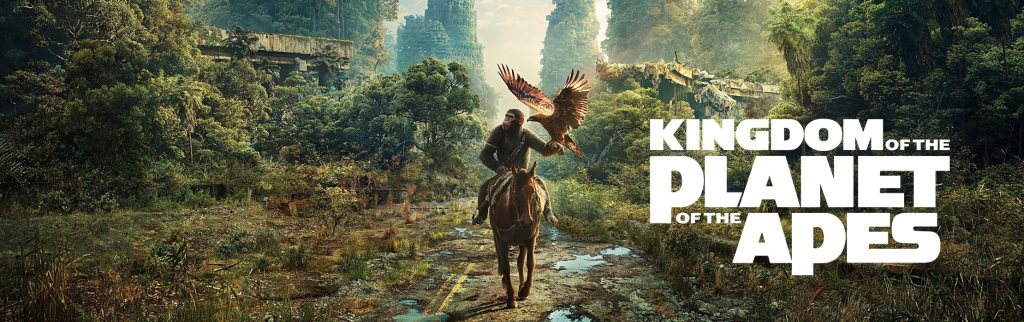
Kingdom of the Planet of the Apes isn’t just a visual spectacle; it’s a heartfelt tribute to the franchise’s rich history, taking place after the events of War for the Planet of the Apes. Director Wes Ball seamlessly blends groundbreaking CGI with a compelling narrative, peppered with references to both the classic 1968 film and the recent Caesar trilogy.
Gone are the days of unconvincing ape costumes! “Kingdom of the Planet of the Apes” takes a massive leap forward thanks to CGI. The apes in this film are rendered with such hyper-realistic detail that you’ll find yourself questioning whether they’re real or not. From the way their fur reacts to the environment to the intricate expressions that dance across their faces, the CGI is a true marvel.
The story follows Noa, a brave young chimpanzee born into the Eagle Clan, a group with no direct connection to Caesar or the San Francisco Ape Colony. Noa embarks on a daring rescue mission, thrusting him into a complex world where the legacy of the past continues to shape the present.
Despite the reliance on CGI, the performances in Kingdom of the Planet of the Apes are truly stellar. Whether it’s the nuanced emotions conveyed by the apes through their motion-capture performances, like the courageous hero Noa, the power-hungry villain Proximus Caesar, the wise orangutan Raka, or the powerful portrayals by the human cast, such as the mysterious Mae, the characters come alive on screen.
For Eagle-Eyed Fans: A Feast of Easter Eggs (Spoilers Ahead)
The film is sprinkled with delightful Easter eggs for eagle-eyed fans. Here are a few to watch out for:
- Echoes from the Past: The sound department did an incredible job by subtly incorporating sound effects from the original 1968 film, like the iconic rattle of a doll – a clever reference to a scene that left audiences speechless back then.
- Caesar’s Legacy Lives On While not a direct sequel to the Caesar trilogy, Kingdom explores the fate of Caesar’s ideals and teachings. We see remnants of an ape society built on his principles, but also factions questioning those very principles, embodied by the antagonist Proximus Caesar. This creates a fascinating tension and leaves us wondering about the future of this ape civilization.
- A Name with Meaning: The name Nova, given to the feral human girl by the apes, holds a subtle double meaning. It’s a nod to both the original film’s ape language (“Nova” meaning “forbidden”) and the name Caesar gives to the human settlement in War for the Planet of the Apes.
- Apes on Horseback: A scene featuring apes riding horses across a vast desert pays subtle homage to the iconic scene from the 1970 film “Beneath the Planet of the Apes” where mutants ride on horseback.
- Symbolic Clues: Pay close attention to the architecture and clothing within the ape society. There might be glimpses of symbols or patterns that resemble those used by Caesar’s ape civilization in the recent trilogy. This could hint at a lingering connection or a potential ideological clash brewing beneath the surface.
- The Forbidden Zone Revisited: While the exact location isn’t explicitly mentioned, the film hints at a “forbidden zone” that some apes revere and others fear. This could be a callback to the original film’s “Forbidden Zone” which ultimately led to the shocking discovery of the Statue of Liberty.
The film goes beyond simply referencing past events. The introduction of characters like Noa and the Eagle Clan opens up a new chapter in the Planet of the Apes saga, exploring different perspectives and societies within this ape-dominated world.
Whether you’re a die-hard Planet of the Apes fan or simply looking for a visually stunning and thought-provoking adventure, Kingdom of the Planet of the Apes delivers. With its incredible special effects, captivating story, stellar performances by both the motion-capture and live-action cast, and clever references to the franchise’s past, this film is a true successor to its legacy. So grab your popcorn, settle in, and prepare to be transported to a world where the apes have risen, and the echoes of the past still resonate.
 lifestylewithsarah.com