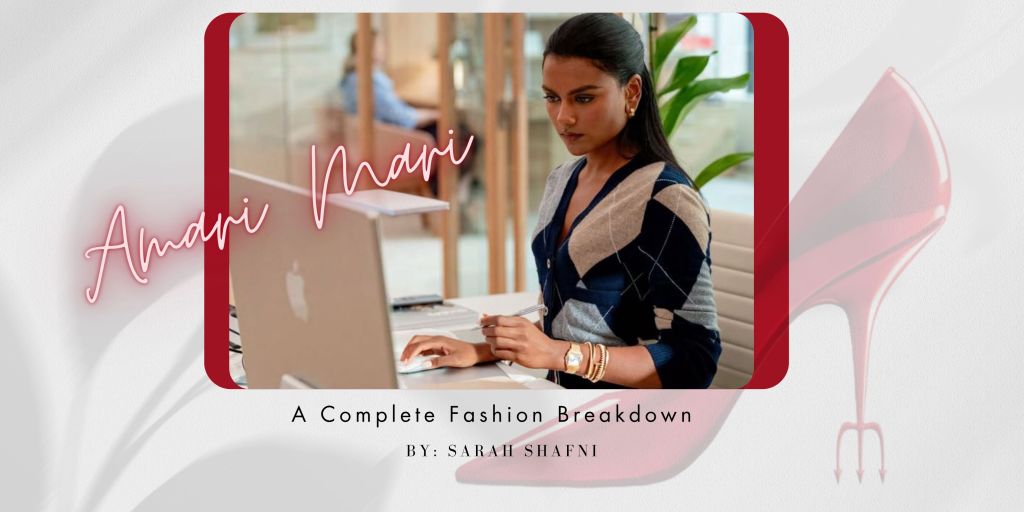
I want to start this post by saying something I genuinely felt while watching The Devil Wears Prada 2.
When Simone Ashley walked onto the screen as Amari, Miranda Priestly’s first assistant, I felt something shift. Not just because she was stunning, not just because the clothes were extraordinary, but because of what her presence in that film represents. A South Asian woman, a brown girl, a woman of colour, standing in the most prestigious fashion office in the world, dressed head to toe in Thom Browne and archival Jean Paul Gaultier, holding her own alongside Meryl Streep, Anne Hathaway, and Emily Blunt, and not once being made to feel like the odd one out.
That is not something we see very often. And in a franchise as iconic as this one, it means more than I think people are giving it credit for.
Who Is Amari?
Simone Ashley plays Amari Mari, Miranda Priestly’s current first assistant at Runway magazine. She is sharp, focused, composed, and very good at her job. She is the one Miranda turns to when she needs someone who actually understands how the world has changed, the only person in the office who can gently redirect the most powerful woman in fashion without losing their head in the process.
Simone Ashley herself described the character perfectly: “She is so confident, a bit of a badass. She is so focused and kind of mysterious.” Director David Frankel was also clear from the very beginning of filming: do not try to be Emily Blunt. Amari is not the next Emily. She is entirely her own person, and the film gives her the space to be exactly that.
What the film also gives her is an extraordinary wardrobe. Costume designer Molly Rogers built Amari’s looks as a masterclass in controlled power: sharp tailoring, archival references, considered proportions, and a tension between restraint and impact that reads as someone who has nothing to prove and everything to say.
Why Representation Here Matters
Before I get into the fashion, I have to say this properly.
The original Devil Wears Prada came out in 2006. The world of high fashion portrayed was, as it always has been, predominantly white, predominantly exclusive, and predominantly designed to make certain people feel like they do not belong. That film was brilliant, and I love it, but its world was narrow.
Twenty years later, the sequel has Simone Ashley, a British Tamil actress, standing at the centre of that same world, dressed by the same calibre of designers, given the same weight in every frame. She is not a background character. She is not a diversity tick. She is Miranda Priestly’s most trusted person in the building, and the camera treats her accordingly.
As someone who cares deeply about representation, about seeing brown girls, South Asian women, and women of colour reflected in spaces where they have historically been invisible, this matters. The fashion world has always been one of the hardest rooms to crack if you do not look a certain way. Seeing Amari in that world, dressed like that, carrying herself like that, is the kind of image that a young South Asian girl watching this film will carry with her. I know I will.
Simone Ashley is also, for what it is worth, genuinely one of the most beautiful women on screen right now. That bone structure, that presence, those eyes. The camera loves her, and she wears every single look like it was designed specifically for her body and her energy. Which, in many cases, it was.
The Fashion: Every Look Broken Down
The Orange Blazer: The Campaign That Started It All
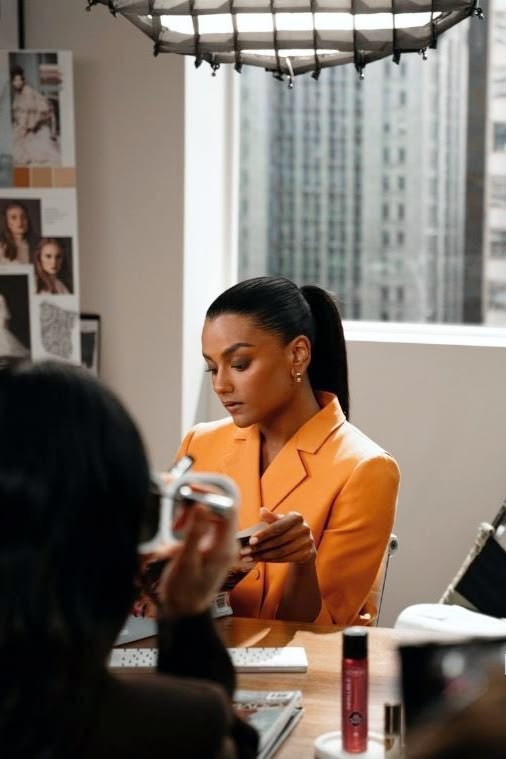
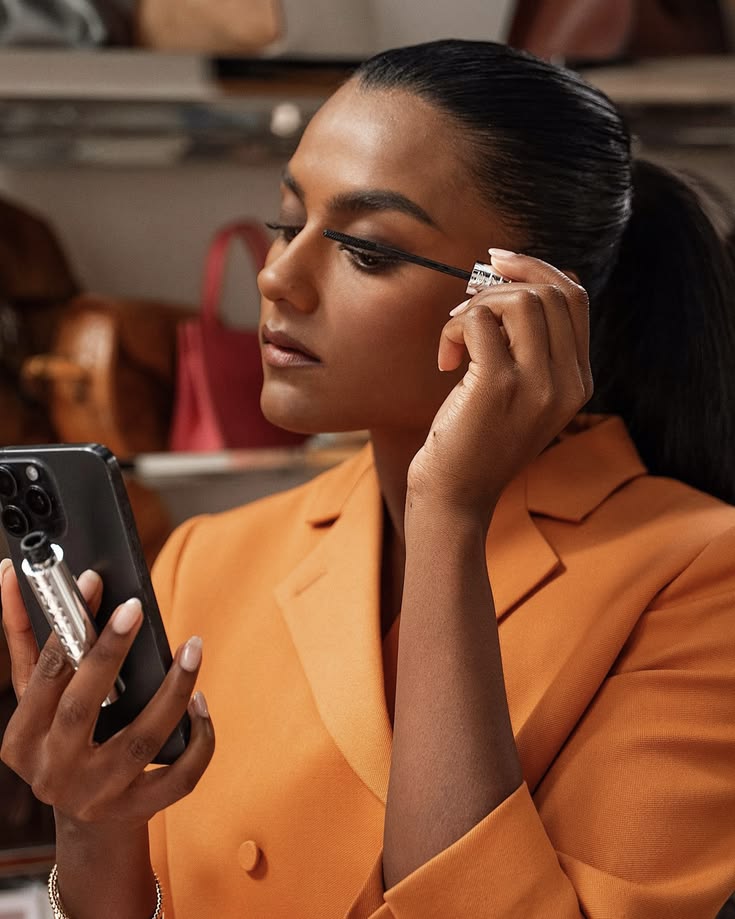
Before the film even hit theatres, Simone Ashley introduced Amari to the world through the L’Oréal Paris promotional campaign, and she did it in a bold tangerine orange double-breasted blazer that immediately told you everything about the character. Sharp, warm, completely confident. Amaris signature sleek high ponytail is as much a part of her character as anything she wears. It is pulled tight, it is deliberate, it never moves. It is the visual equivalent of someone who has already decided the answer before you finish asking the question. The campaign ran at the Oscars and announced her arrival in the franchise in the best possible way.
Look: Bold orange double-breasted blazer, sleek high ponytail, gold stud earrings
The Met Gala Look: 2011 Jean Paul Gaultier Couture
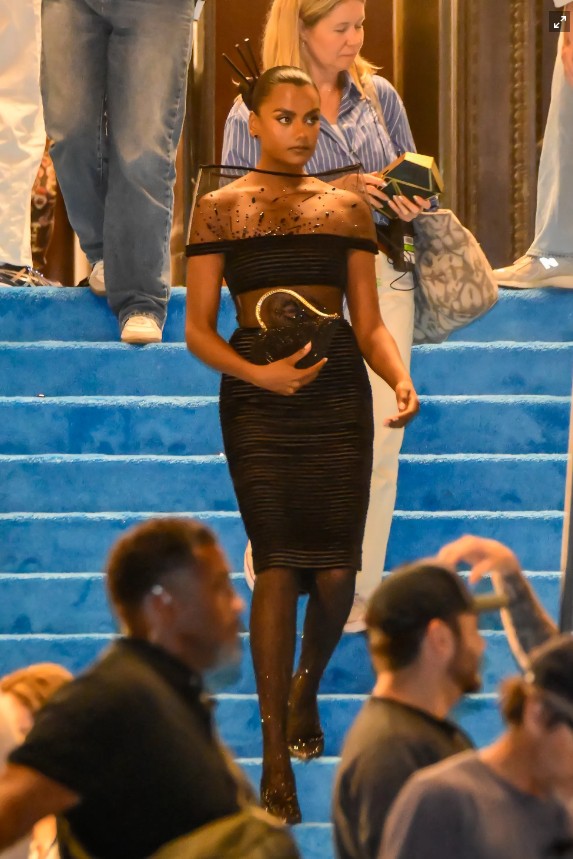
This is the look that stopped me mid-scene. For the film’s Met Gala sequence, Amari descends the iconic blue staircase in a 2011 Jean Paul Gaultier Couture black sculptural mesh dress. The off-shoulder neckline is scattered with crystals that catch the light as she walks, and the bodycon horizontal stripe skirt gives the silhouette an architectural, almost armour-like quality. She carries a Bulgari Black Serpenti leather clutch and wears dramatic hair accessories with gold pins. The whole look is bold, dark, and completely assured. This is a woman who arrived at the Met Gala knowing exactly what she was doing.
Designers: 2011 Jean Paul Gaultier Couture black sculptural mesh dress, Bulgari Black Serpenti leather clutch
The Blue Slip Dress: Off-Duty Done Right
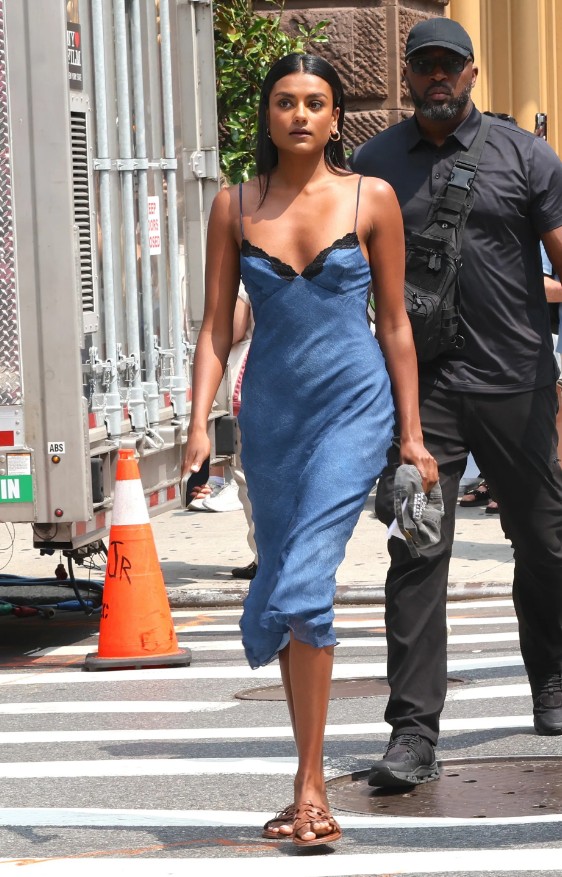
This is Amari outside the walls of Runway, and the ease of this look says everything about who she is when no one is watching. A blue denim-wash satin slip dress with delicate black lace trim at the neckline, thin spaghetti straps, and a fluid bias-cut skirt that moves with her on the street. She wears tan flat leather slides and gold hoop earrings, nothing more. The lace trim is the detail that elevates it from simple to considered. This is not a woman who stops dressing well when she leaves the office. It is just a different register of the same impeccable taste.
Designers: Blue denim-wash satin slip dress with black lace trim, tan flat leather slides, gold hoop earrings
The Landscape Pinafore: The Look Everyone Will Be Talking About
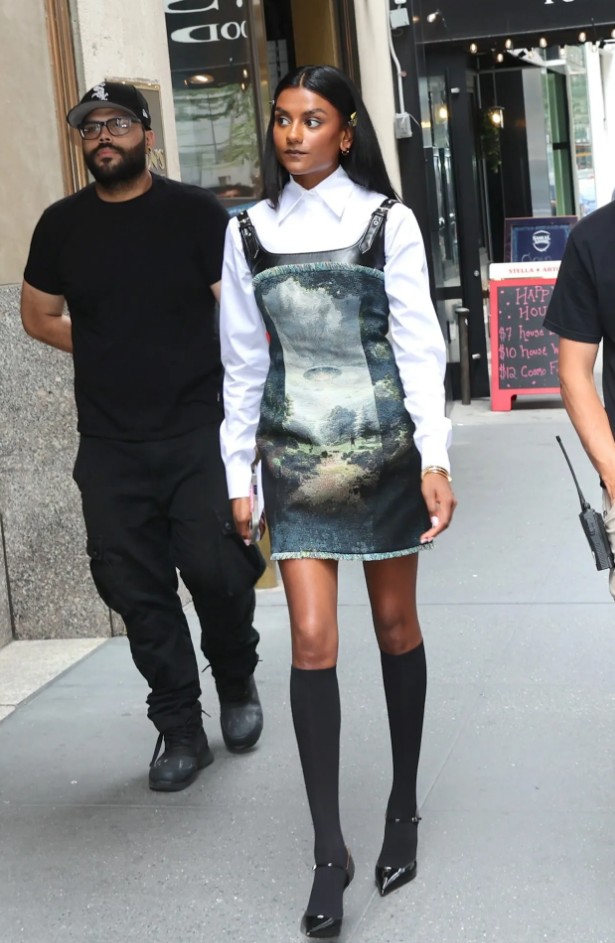
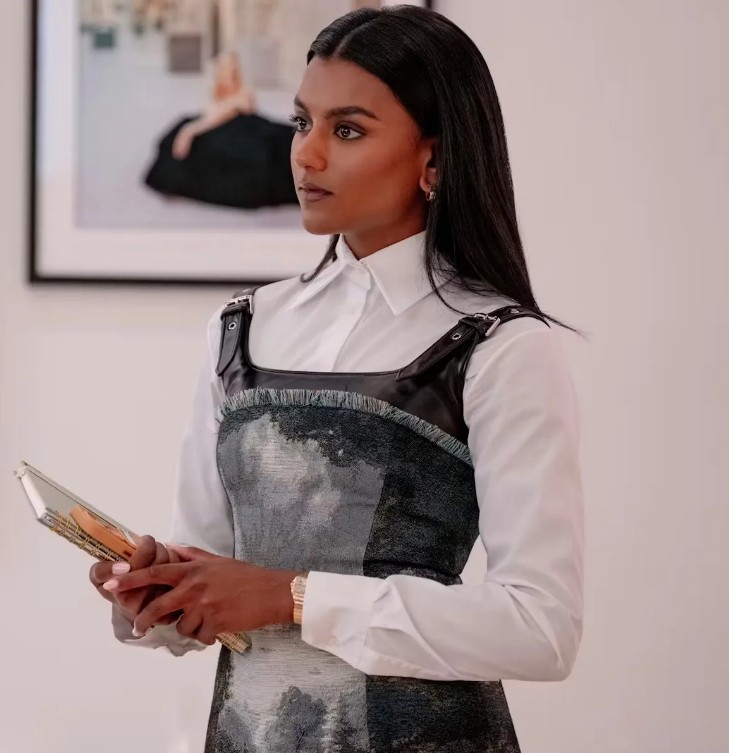
This is the most editorial look Amari wears outside the Runway offices, and it is completely unexpected. A white oversized long-sleeve shirt layered under a dark landscape-print denim pinafore mini dress with black leather buckle straps and frayed denim trim. The print appears to be a classical painterly landscape rendered on denim, the kind of detail that reads as both art-world and fashion-world simultaneously. She pairs it with black knee-high socks and black patent pointed-toe kitten heels, gold hoop earrings, and a Cartier Tank watch at the wrist. The combination of the oversized white shirt underneath, the structured pinafore on top, the knee socks, and the sharp little heels is precise and deliberate and genuinely brilliant. This is the look you will see recreated everywhere.
Designers: White oversized long-sleeve shirt, dark landscape-print denim pinafore mini dress with black leather straps, black knee-high socks, black patent pointed-toe kitten heels, Cartier Tank watch
The Plaid Shirt and Tie: Quiet Authority
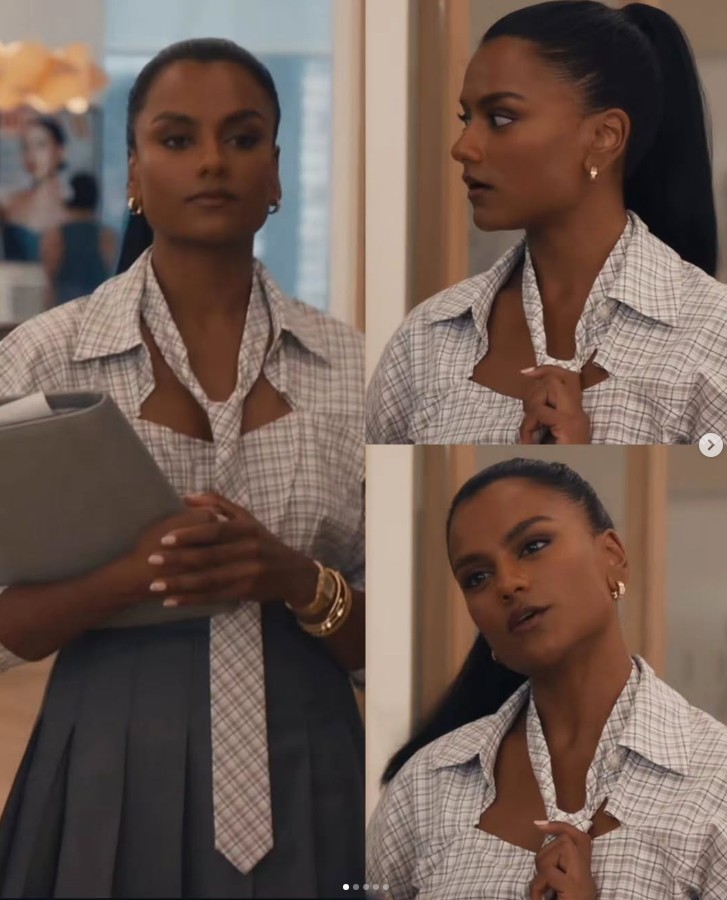
Inside the Runway offices, Amari wears a white and grey plaid short-sleeve shirt with a matching plaid tie hanging loose at the collar. The tie is everything here. It is a recurring motif woven deliberately through the women’s wardrobes across this entire film, and Amari wears hers with complete nonchalance. Paired with a dark grey pleated midi skirt, gold bangles stacked at the wrist, and her Cartier Tank watch. Hair in a sleek high ponytail. This is Amari at her most functional and still somehow the most interesting person in the room.
Designers: White/grey plaid short-sleeve shirt with matching plaid tie, dark grey pleated midi skirt, Cartier Tank watch, gold bangles
The Patchwork Blazer Dress: Fashion Insider Credentials
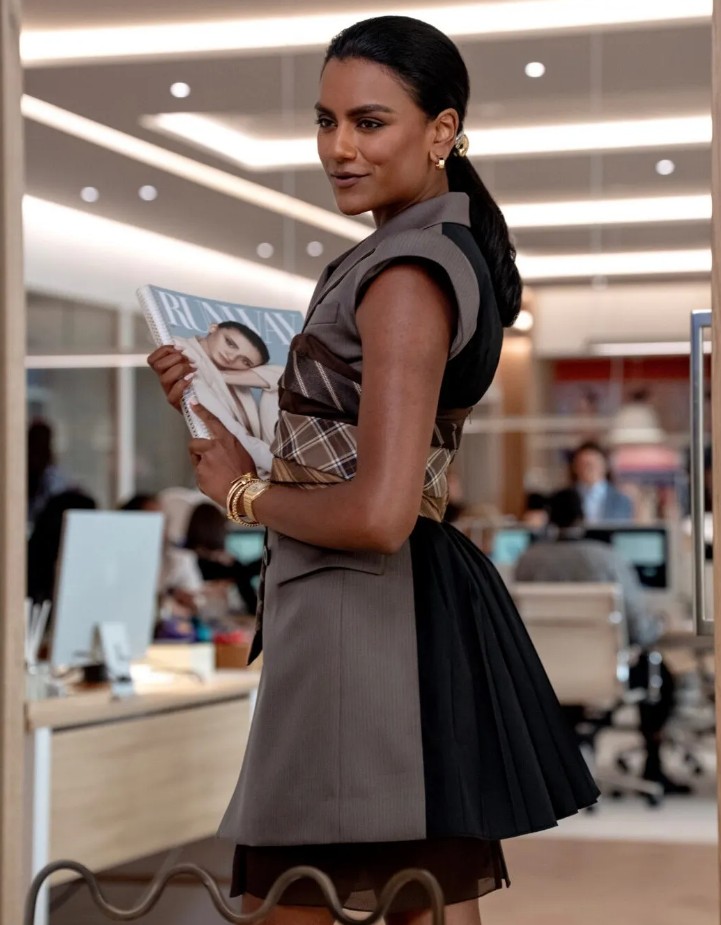
This look requires a second and a third look to fully absorb. A sleeveless structured blazer dress constructed from a patchwork of grey, brown, and tan plaid fabrics, with a black pleated skirt hem that gives the whole silhouette a dramatic finish. The construction is intricate, and the result is something that feels both tailored and editorial at once. Gold bangles and her Cartier Tank watch at the wrist, hair pulled back low, holding the Runway magazine. This is Amari in her element, the assistant who knows every look, every label, and every rule, including which ones she can break.
Designers: Grey, brown, and black patchwork sleeveless structured blazer dress with black pleated hem, Cartier Tank watch, gold bangles
The Thom Browne: Sharp, Precise, Unmissable
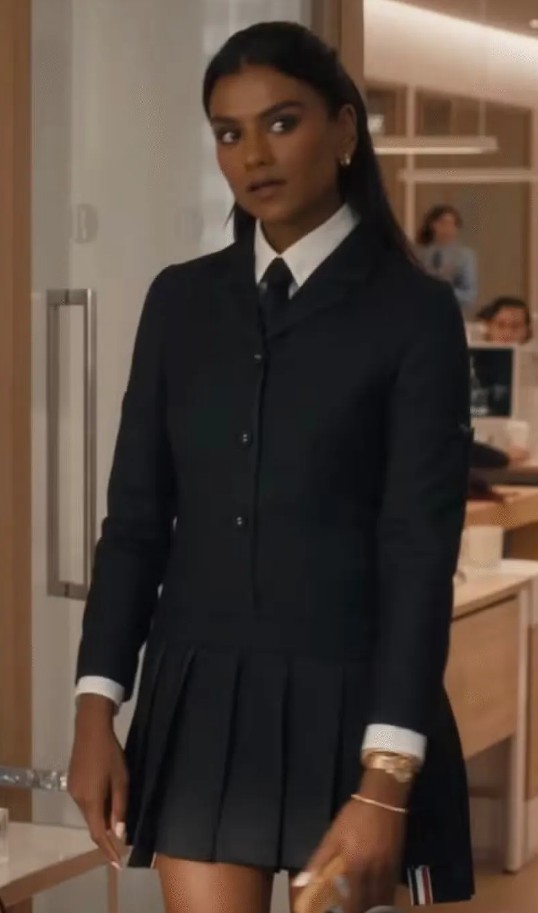
Simone Ashley specifically called out her Thom Browne look as a personal highlight of the entire film. She said it was an honour to wear the designer and that his work genuinely helped her develop Amari as a character. This look is the most iconic of those moments. A Thom Browne black pleated blazer mini dress with a white shirt collar and white cuffs at the wrists, a slim black tie at the neck, and the Thom Browne logo visible at the cuff. Every Thom Browne house code is here: precision, schoolboy references, razor-sharp construction. On Amari, it reads as power in its most controlled form. She is not a performing authority. She simply has it.
Designers: Thom Browne black pleated blazer, mini dress, white shirt collar and cuffs, black tie
The Party Look: Texture Clash Done Perfectly
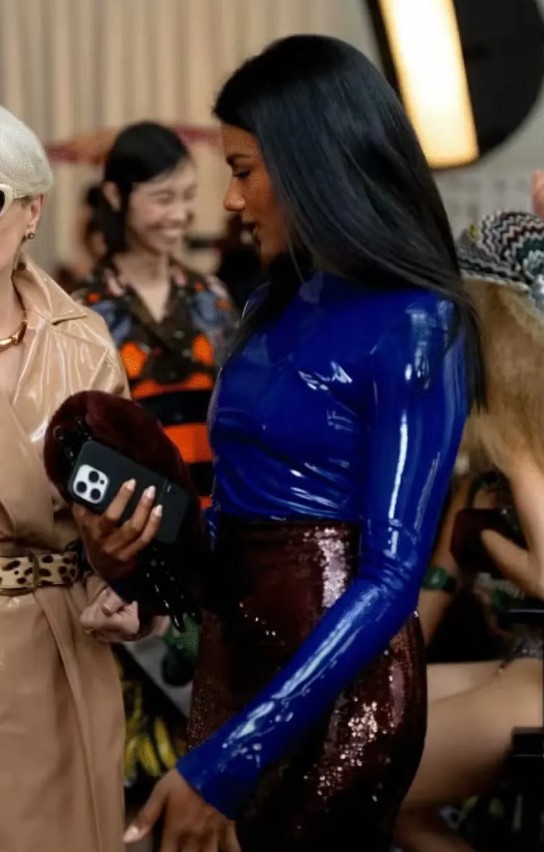
Away from the Runway offices, Amari fully lets the fashion speak. An electric cobalt blue PVC long-sleeve top worn with a deep burgundy sequin mini skirt: a deliberate clash of finish and texture that is bold and completely intentional. The liquid blue catches the light differently from every angle, and against the deep burgundy sequin underneath, the combination creates an exciting tension without ever tipping into chaos. This is Amari at a party, still the most interesting person in the room, still not particularly trying to be.
Designers: Electric blue PVC long-sleeve top, burgundy sequin mini skirt
The Bigger Picture
What Simone Ashley does in this film is not just act and look extraordinary. She shifts something in the visual language of the story.
The original Devil Wears Prada gave us a world where one kind of woman was allowed to be powerful, polished, and fashionable on screen. The sequel, twenty years later, puts a South Asian woman in that same world and gives her the exact same level of sartorial investment: the same archival Jean Paul Gaultier couture, the same Thom Browne tailoring, the same Cartier watch, the same Molly Rogers-designed precision.
That is how the fashion world evolves. Not just in the clothes, but in who gets to wear them on screen.
Amari does not walk into Runway apologising for being there. She walks in with a high ponytail, a Thom Browne blazer dress, and zero interest in making herself smaller. And for every brown girl watching this film who has ever felt like the fashion world was not built for them, that image is everything.
We see you, Amari. And we are very glad you are here.
Loved this breakdown? Check out my full fashion post covering Miranda, Andy, and Emily’s complete looks in The Devil Wears Prada 2
Fashion credits sourced and verified from Femestella, WWD, Variety, Elle India, and Tatler Asia. Photo credits: Macall Polay. © 2026 20th Century Studios. All Rights Reserved.


One thought on “Amari, We See You: Simone Ashley and Why Her Style in Devil Wears Prada 2 Matters”