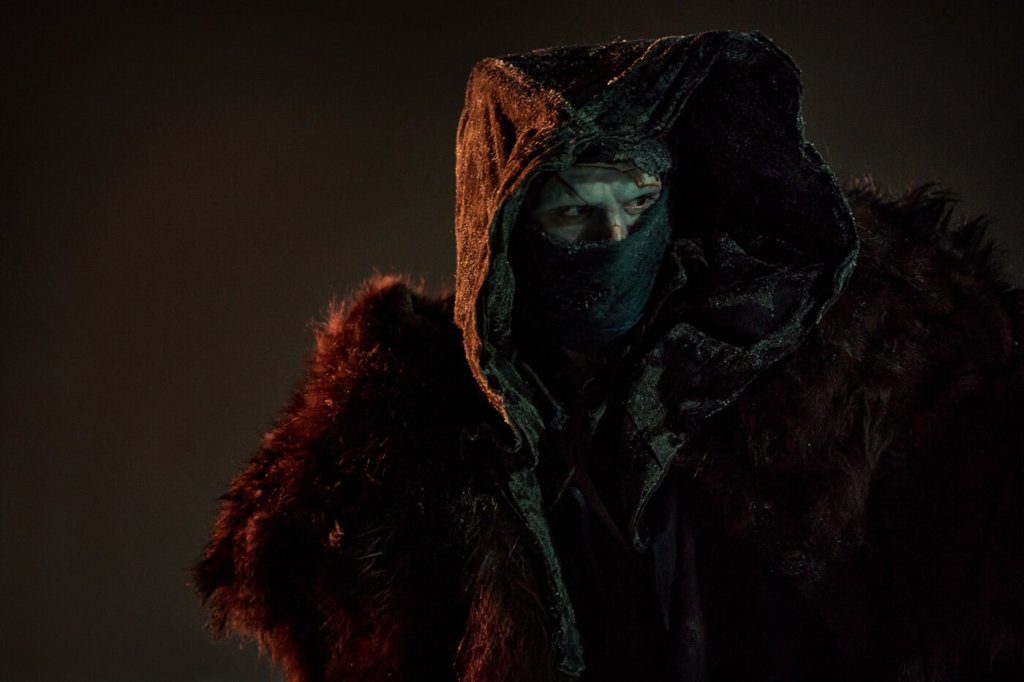
For anyone who loves fashion, storytelling, and character-driven design, Frankenstein (2025) by Guillermo del Toro is a masterpiece. The costumes, designed by Kate Hawley, go far beyond historical dressing. They communicate identity, transformation, emotion, and humanity. Every stitch and silhouette carries meaning.
For modest-fashion enthusiasts, there is something especially poetic here. These costumes show that layering, fabric, and color can express not only beauty, but also restraint, mystery, and depth. It reminds us how clothing can mirror our inner world while staying true to who we are.

The Vision Behind the Costumes
The costume designer, Kate Hawley, collaborated closely with Guillermo del Toro to build a world that looked familiar to the 1850s but felt new. They rejected the usual dark and gothic Victorian palette and instead leaned into vibrancy, symbolism, and emotion.
Hawley said her goal was to explore “what else could it be,” rather than repeat visual clichés. The result is a series of looks that are expressive, layered, and emotionally charged. Each garment helps tell the story, whether through silhouette, movement, or material.
Fabrics, Textures, and Color Palettes
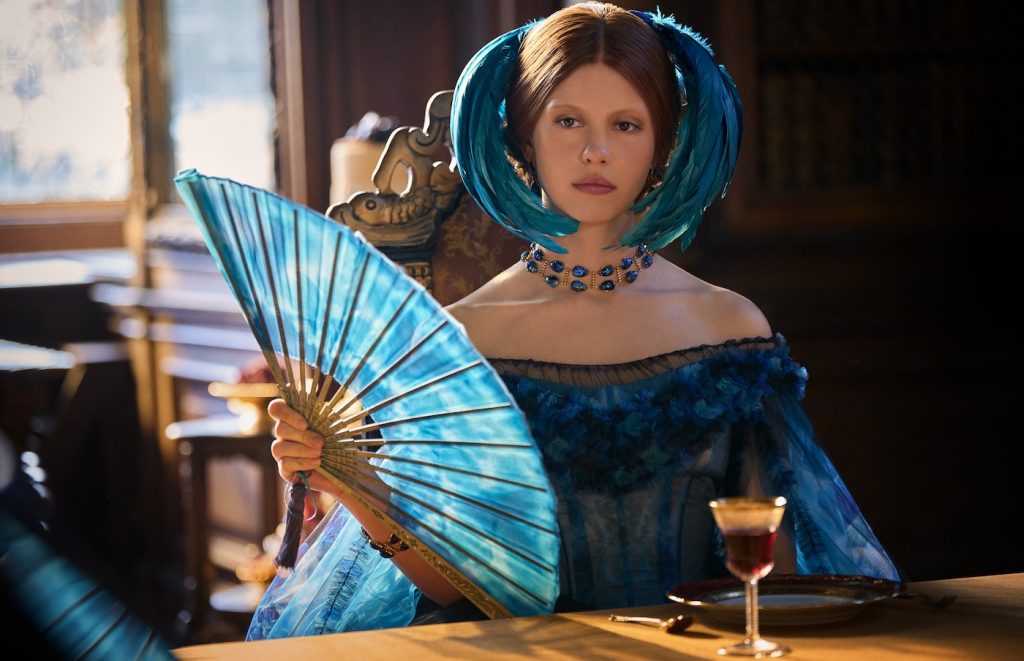
The costume direction draws inspiration from Art Nouveau, old Tiffany & Co. archives, and the organic beauty of the natural world. For Elizabeth, played by Mia Goth, Hawley used duchess silk satin, organza, and sheer silk. One gown is described as “an X-ray of a dress,” layered and translucent, built to show both fragility and inner strength.
Instead of the typical black and grey of most gothic films, Hawley and del Toro intentionally broke that rule. They used color to represent emotion, rebellion, and humanity. The result is visually stunning and emotionally alive.
Inspirations and Symbolism
The world of Frankenstein is filled with references to nature, anatomy, and entomology. Hawley and del Toro looked to the structure of beetles, the patterns of x-rays, and the fine details of cellular forms.
Elizabeth’s character was inspired by insects, particularly beetles, representing resilience, transformation, and beauty in unexpected forms.

A key piece is her scarab necklace, originally designed by Meta Overbeck for Tiffany in 1914. It symbolizes rebirth and the connection between human fragility and natural cycles.
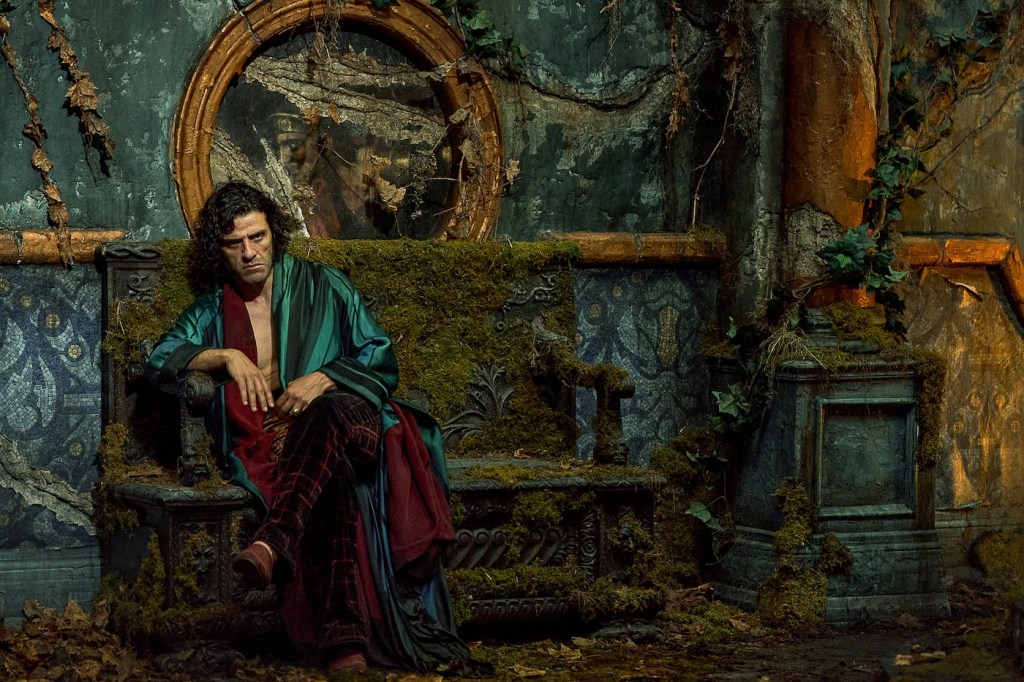
Color also plays an emotional role. Red appears as a recurring motif, seen in Claire’s gown, Victor’s gloves, and small details that link love, loss, and creation. Victor’s own wardrobe has touches of David Bowie’s Thin White Duke and Prince, representing artistry, ego, and the theatrical side of his descent.
Hawley created detailed mood boards of watercolor sketches, anatomical references, and nature drawings to capture both historical realism and emotional texture.
The color palette throughout the film is luminous and deeply symbolic. You’ll see rich greens, purples, magentas, and iridescent blues inspired by beetle wings. These colors give life to the story while representing transformation and rebirth.
Costume Details and Connection to Modest Fashion
For those in modest fashion, the costume design in Frankenstein is a brilliant study of how to combine modesty, beauty, and storytelling.
Elizabeth’s gowns use layered organza and delicate silk, creating movement and mystery. Her soft green-blue dress with a gauzy veil shows that modest dressing can still be full of emotion and power. The veil, instead of concealing her, becomes a shield of grace and identity.
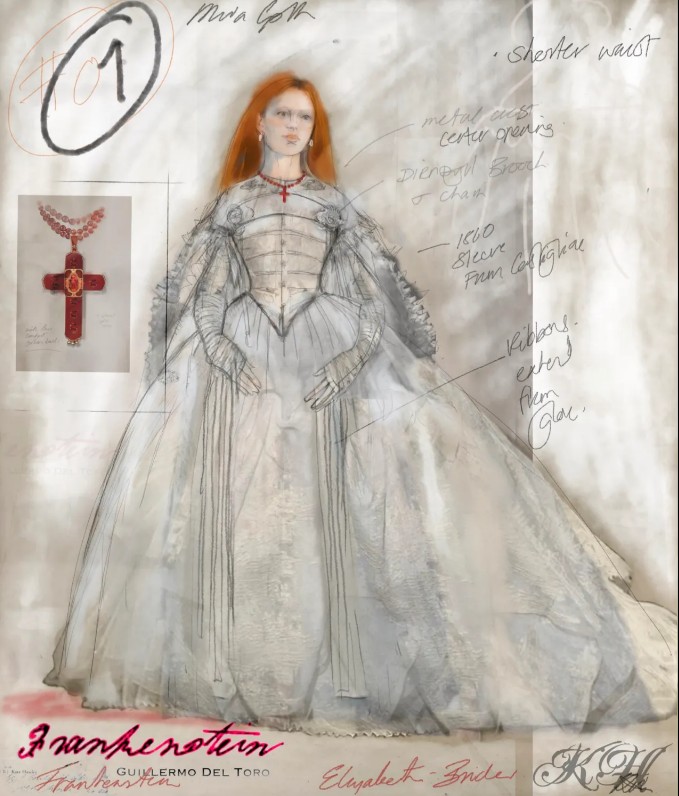

Her wedding dress is another deeply symbolic piece. Created with ribbons wrapped around her arms and a multi-layered fabric structure, it mirrors the bandages worn by the Creature when first brought to life. These ribbons represent her love and connection to the story of creation and sacrifice, her bond with Frankenstein, her compassion for what he made, and visually express her emotional scars and resilience. The idea of using clothing to reflect one’s internal state is powerful and especially relevant for modern design.
Victor’s costumes evolve throughout the film. At the beginning, his wardrobe is tailored and rich with velvet and brocade, showing ambition and control. As he descends into obsession, his clothes become looser, rougher, and more chaotic, reflecting his loss of humanity.
The film also treats jewellery as part of costume design. Elizabeth’s Tiffany pieces, including a 40.45-carat garland necklace, are not for glamour. They tell her story of power, heritage, and confinement. Each accessory carries meaning.
Why This Matters for Designers and Fashion Enthusiasts
The brilliance of these costumes lies in their thoughtfulness. They prove that fashion is not just decoration, it’s communication.
For designers, Hawley’s work is an example of how to merge historical references with emotion. Her palette choices challenge the predictable. Her use of light fabrics in dramatic settings creates contrast and tension.
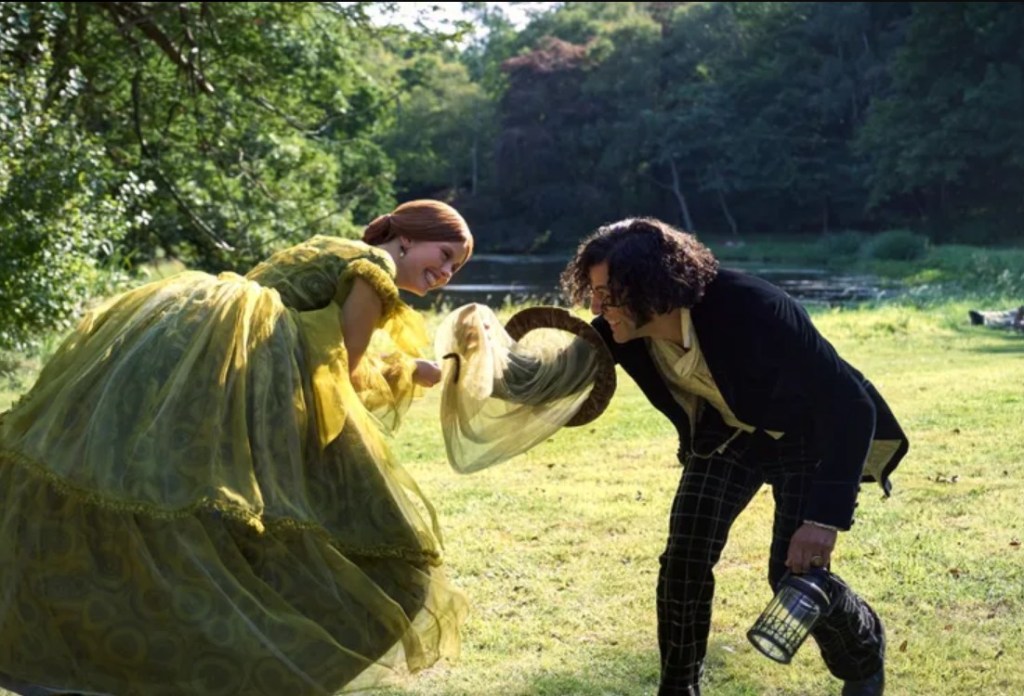
For modest-fashion creators, there’s inspiration in how layers and texture can suggest inner emotion while remaining elegant and composed. It’s a reminder that beauty can exist in subtlety, not exposure.
The symbolism in these costumes also connects to the spiritual side of creation. Just as Victor’s ambition led to his downfall, Hawley’s designs show the cost of obsession and the beauty of restraint. Every material choice has intent, a message, and a reflection of the soul.
Frankenstein is a perfect example of why fashion in film matters. Kate Hawley and Guillermo del Toro have created a world that feels alive, where clothing carries memory, identity, and transformation.
These costumes are not just garments; they are emotional architecture. They remind us that storytelling through fabric is one of the oldest and most powerful languages in the world. For anyone passionate about modest fashion, design, or cinematic art, this film is a study in how to dress emotion, not just the body.
 lifestylewithsarah.com