
Pixar’s return to the world inside Riley’s mind with “Inside Out 2” is more than just a sequel; it’s an exploration of human emotions, particularly those that come crashing down during the turbulent years of adolescence. While the original film captured the innocence of childhood, “Inside Out 2” tackles the complexities of growing up, making it a relatable experience not just for children, but for adults as well.
The film beautifully portrays the introduction of new emotions alongside the familiar cast of Joy, Sadness, Anger, Disgust, and Fear. The standout newcomer is undoubtedly Anxiety, a character voiced with delightful neuroses by Maya Hawke. Anxiety personified is a bundle of nervous energy, constantly scanning for potential dangers and stressing about the future. This relatable portrayal is a masterstroke – Anxiety isn’t a villain to be banished from Headquarters, but a misunderstood emotion that can be overwhelming if left unchecked.
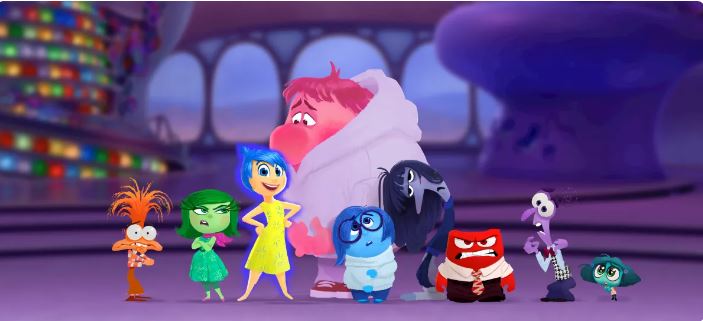
Seeing Anxiety interact with the other emotions highlights the film’s core message: all emotions serve a purpose. While Joy may be the bright star, and Sadness the one we often try to avoid, Anxiety’s presence reminds us of the importance of caution and preparation. Adults who have grappled with anxiety throughout their lives will find a unique comfort in seeing this emotion finally given a voice and a place within the emotional spectrum.
But “Inside Out 2” goes beyond mere relatability. It delves into deeper themes of mental health, a topic that often feels taboo but is crucial to address, especially for younger audiences. As Riley navigates the pressures of adolescence school expectations, social anxieties, and the ever-present fog of self-doubt the film doesn’t shy away from portraying the rollercoaster of emotions she experiences. We see moments of frustration, loneliness, and even despair, all of which are valid and understandable experiences.
By giving a visual representation of these struggles, “Inside Out 2” helps normalize the conversation around mental health. It encourages viewers of all ages to acknowledge their emotions, both positive and negative, and to seek help when needed. The film fosters empathy, allowing adults to see the world through the eyes of a teenager and teenagers to understand that the confusion and anxieties they feel are not uncommon.
However, the film doesn’t dwell on the darkness. Just as importantly, it showcases the power of healthy coping mechanisms. We see the importance of open communication, as Riley confides in her parents and friends. The film emphasizes the value of self-care, with moments of relaxation and activities that bring joy. Ultimately, it promotes the message that mental health is a journey, not a destination and that seeking support is a sign of strength, not weakness.
“Inside Out 2” is more than just a children’s movie. It’s a reminder for adults who may have forgotten the complexities of growing up. It’s a conversation starter about mental health, a topic that should be discussed openly and without stigma. The film’s greatest strength lies in its ability to make viewers – young and old – feel understood. We see ourselves in Riley, in her triumphs and struggles, in her moments of joy and despair. And perhaps, in seeing our own emotions reflected on us, we can learn to appreciate them all, and navigate the messy but wonderful journey of life.

The film leaves us with a sense of hope and optimism. Even as Riley faces challenges, we see the resilience of the human spirit. We witness the strength of the human mind, its ability to process a multitude of emotions, and the power of connection in navigating the ups and downs of life.
“Inside Out 2” reminds us that it’s okay to feel everything and that with a little understanding and support, we can all find our inner balance. 💗
 lifestylewithsarah.com