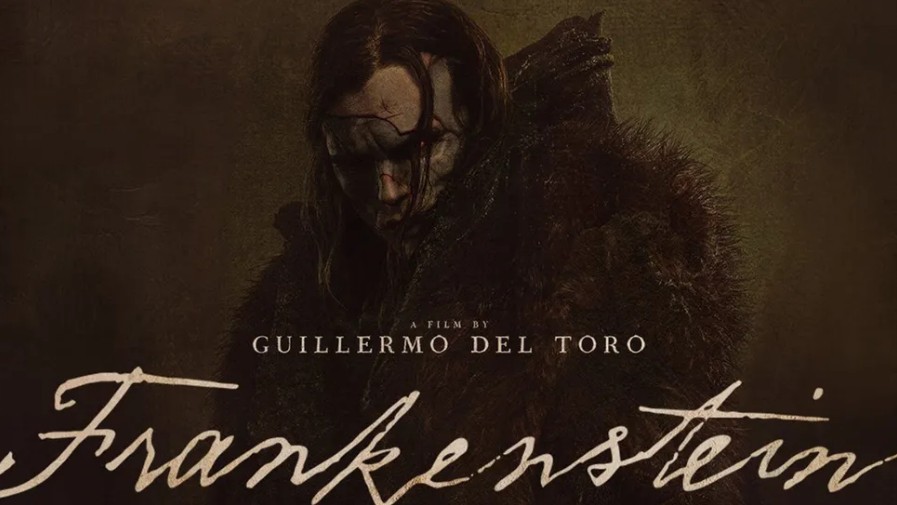
Watching Guillermo del Toro’s Frankenstein is like stepping into a richly painted gothic tapestry where emotions, myth, human tragedy, and a hauntingly dark romance swirl together. This is not just a remake or a horror film. It is a deeply textured, old-world creation, built with care, ambition, and a clear love for the story and its characters.
Old-World Building and Atmosphere
The film is set in the Victorian era around 1857, and every detail reinforces the time period. The production design, lighting, costumes, and locations all work together to create a world that feels alive. Every corridor, laboratory, and shadowed corner carries weight, history, and emotion. Del Toro uses gothic elements not just for style but to create mood, character depth, and the sense of dread that comes from trying to play God. The world feels authentic and layered, making the story immersive from the very first scene.

Real Set design and craft
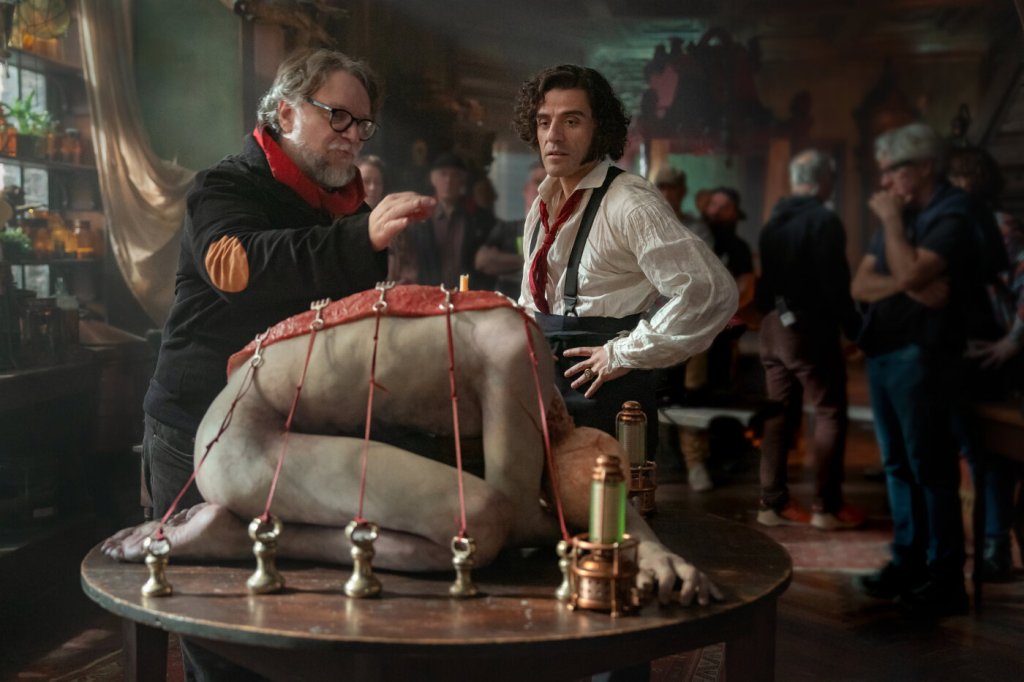
The set design in Frankenstein is extraordinary and deeply immersive. Under the eye of production designer Tamara Deverell, every major environment was built by hand. The massive ship that opens the film was constructed in full on a backlot in Toronto, mounted on a mechanical gimbal so the action and ice-bound motion were real rather than CGI. Del Toro insisted on this approach, saying the ship was not a simulation but a character in its own right. The laboratory, too, was painstakingly created, with stone towers, giant circular windows, authentic scientific equipment, and sculptures that echo themes of life, death, and creation. The result is a world you can believe in, one that draws you in visually and emotionally, reinforcing the gothic romance and tragic journey at the heart of the film.
Artistic Approach and Directorial Mastery
Del Toro’s genius lies in how he blends design, storytelling, and emotion. The sets, colors, and lighting do more than look beautiful; they reflect the inner states of the characters. There is psychological depth to the film that makes even small visual details meaningful. Every piece of machinery, every dark corridor, and every subtle glow of candlelight tells a story of ambition, regret, longing, and love. Watching it feels like entering an emotional space that is both gothic and profoundly human.
Performances, Character Arcs, and Dark Romance

Oscar Isaac’s portrayal of Victor Frankenstein is remarkable. He balances brilliance, arrogance, obsession, vulnerability, and a complex yearning. At the start, Victor is almost monstrous in his obsession with creating life. Gradually, as the story unfolds, we see him transform into a true monster. His erratic behavior and moral decay are mirrored in his wardrobe, which shifts from polished, refined suits to rough, bear-like costumes, showing the erosion of his humanity.

Jacob Elordi, as the Creature, gives one of his most hauntingly emotional performances to date. He embodies strength and fragility in equal measure, carrying loneliness, purity, longing, intelligence, and pain in every movement. His attempt to understand the world, his grief at being unloved, and his quiet yearning for companionship remind us of how deeply human the need for connection truly is. There’s a raw, aching vulnerability in his portrayal that turns the story from tragedy into something profoundly moving.
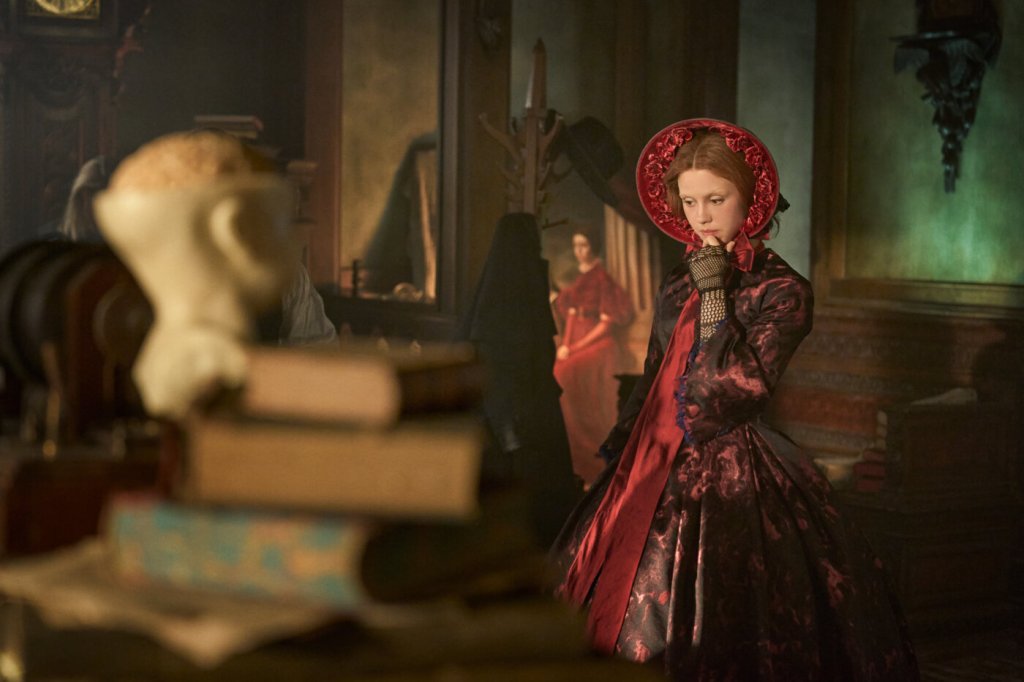
Mia Goth, in her dual role as Elizabeth and Clare, brings grandeur, innocence, and delicate emotional nuance. Her ethereal presence and yearning elegance elevate her character, giving the story a hauntingly romantic gothic core. The romance between Victor and Elizabeth, alongside the Creature’s longing for her, may suggest a love triangle at first glance, but it is far more layered than that. It is a gothic love story of desire, yearning, and connection shaped by loss, background, and circumstance. Their interactions feel almost otherworldly at times, like an out-of-body experience where emotions are heightened, layered, and darkly beautiful.

Emotion, Innocence, and Themes
The film’s heart lies in its characters and their relationships. There is horror, gore, and darkness, but also innocence, wonder, grief, and longing. The Creature’s exploration of the world is heartbreaking yet luminous. Victor’s hubris and God-like ambitions are tragic, and Elizabeth’s empathy underscores what is lost when obsession and ambition take over. Del Toro asks who the real monster is, and through the lens of romance and human emotion, the answer feels tragically clear. The horror comes from human nature, ambition, and Victor’s downfall, the curse of playing God.
Costume Notes Relevant to Story
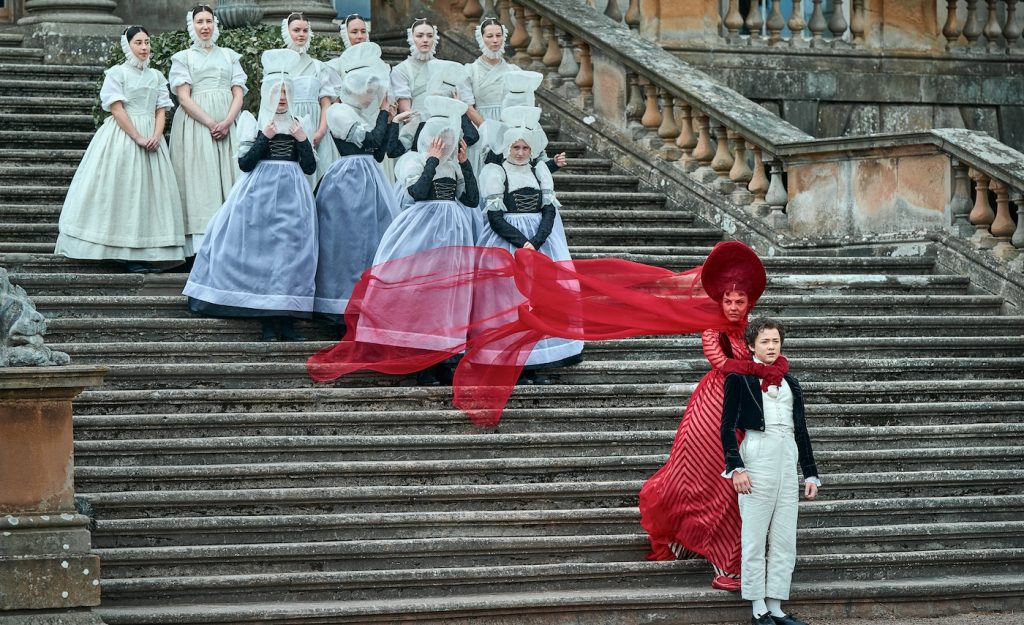
While a full costume analysis belongs in a separate post, it is worth noting how costumes reflect character evolution and emotion. Victor’s transformation into a monster is mirrored in his wardrobe, reflecting his moral and emotional descent. Mia Goth’s ethereal elegance amplifies the emotional weight of the romance and deepens the gothic tone of the story. Costumes are a visual language that heightens the narrative, subtly reinforcing the emotions and inner lives of the characters.

Frankenstein is a cinematic experience that transcends horror. Guillermo del Toro proves once again that he is not just a creator of monsters but a master of myth, emotion, gothic romance, and world-building. Oscar Isaac, Jacob Elordi, and Mia Goth deliver unforgettable performances rich with complexity and emotion. This film is about creation, identity, loneliness, and the human heart, and it is a darkly romantic, visually immersive story that lingers long after the credits roll. For anyone who loves layered storytelling with haunting visuals, this is a must-watch.
 lifestylewithsarah.com